Wegovy Pill vs. Injection: How the Oral and Weekly Versions Compare
The 25 mg Wegovy tablet reached pharmacies in January 2026. Same molecule as the injection — but a different daily routine, and two indications it does not carry.

Read this first
Educational, not medical advice. Dosing and suitability are decisions for you and a licensed clinician. Compounded GLP-1s are prepared by licensed 503A and 503B compounding pharmacies and are not the same as the branded products described here.
For four years the only way to take semaglutide for weight loss was a weekly injection. That changed on December 23, 2025, when the FDA approved a 25 mg tablet under the same Wegovy brand name. It reached US pharmacies in January 2026.
It is the same molecule, from the same manufacturer, sharing a single prescribing label. The differences are not really about the drug — they are about the routine it asks of you, and about who each version is approved to treat.
The short version
| Tablet | Injection | |
|---|---|---|
| How often | Once daily | Once weekly |
| Maintenance dose | 25 mg | 2.4 mg (or 1.7 mg) |
| Timing rules | Empty stomach, morning, ≤ 4 oz water, wait 30 min | Any time of day, with or without food |
| Time to maintenance | 91 days | 17 weeks |
| Approved for adults | Yes | Yes |
| Approved for ages 12–17 | No | Yes |
| Approved for MASH liver disease | No | Yes (accelerated approval) |
| Cardiovascular risk reduction | Yes | Yes |
How much weight do people lose on each?
In OASIS-4, the trial behind the tablet's approval, participants who stayed on treatment lost a mean 16.6% of body weight, and about one in three lost 20% or more. In STEP 1, the registration trial for the 2.4 mg injection, mean weight loss was 14.9% at 68 weeks.
Resist the urge to read that as the pill winning. These were separate trials, run at different times, in different populations, with different analysis methods — the 16.6% figure describes people who adhered to treatment, which is a more favourable measure than the trial-wide average. There is no head-to-head study. The fair summary is that the two deliver weight loss in the same broad range.
The daily routine is the real difference
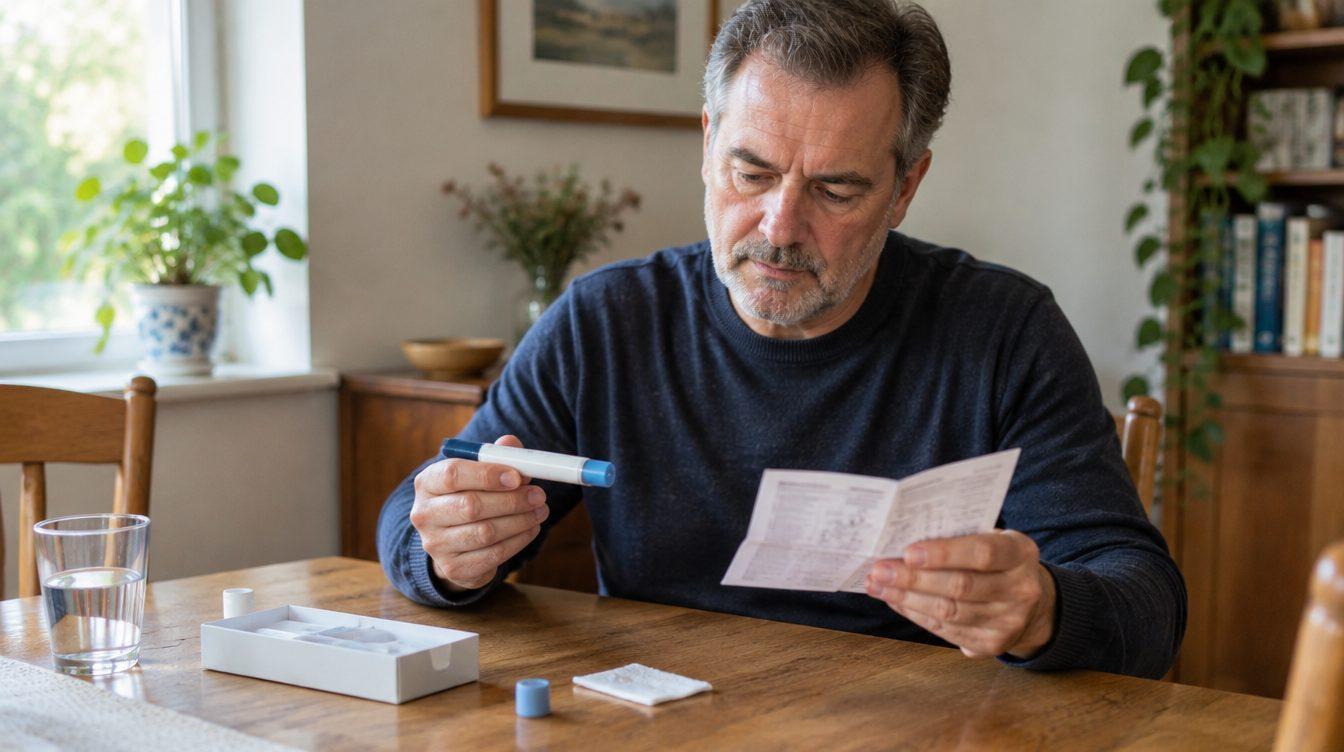
This is where most people will actually decide, and it is the part the headlines skip. Semaglutide is a large peptide that is poorly absorbed from the gut, so the tablet only works under strict conditions. The label is specific:
- Take it in the morning on an empty stomach.
- Swallow it with no more than 4 ounces of water — and no other liquid. Not coffee, not juice.
- Swallow it whole. Do not split, crush, chew or dissolve it.
- Then wait at least 30 minutes before eating, drinking anything else, or taking any other oral medication.
- Never more than one tablet a day.
The injection has none of this. The label says once weekly, same day each week, any time of day, with or without meals, into the abdomen, thigh or upper arm — and you can change the day and the site without adjusting the dose.
So the honest trade is this: the injection costs you a needle once a week. The tablet costs you a protected half-hour every morning, including weekends, holidays and travel days, and a 30-minute delay on your coffee and any other morning medication. People who take thyroid medication on an empty stomach will recognise the problem immediately.

How the doses step up
Both versions titrate slowly to limit nausea, but on different clocks.
| Tablet (daily) | Injection (weekly) |
|---|---|
| Days 1–30: 1.5 mg | Weeks 1–4: 0.25 mg |
| Days 31–60: 4 mg | Weeks 5–8: 0.5 mg |
| Days 61–90: 9 mg | Weeks 9–12: 1 mg |
| Day 91 onward: 25 mg | Weeks 13–16: 1.7 mg |
| — | Week 17 onward: 2.4 mg |
If a dose is not tolerated during escalation, the label says to consider delaying the step up rather than pushing through.
What each one is approved to treat
This asymmetry gets almost no coverage, and for some people it settles the question outright. Both versions are approved to reduce major adverse cardiovascular events in adults with established cardiovascular disease and either obesity or overweight, and both are approved for weight reduction in adults.
But the injection alone is approved for two more things: weight reduction in adolescents aged 12 and older with obesity, and the treatment of noncirrhotic MASH with moderate to advanced liver fibrosis, under accelerated approval. If either applies to you, the tablet is not an option.
Can you switch between them?
Yes, and the label gives the protocol rather than leaving it to guesswork.
- Injection to tablet: patients on 2.4 mg injection may switch to 25 mg tablets. Start the tablets one week after the last injection.
- Tablet to injection: patients on 25 mg tablets may switch to the injection.
- If the 25 mg tablet is not tolerated, the label specifically suggests considering the 1.7 mg weekly injection instead — a lower-exposure route rather than abandoning treatment.
Missed doses are handled differently
With the tablet, skip the missed dose entirely and take the next one the following day. With the injection, take it as soon as possible if the next scheduled dose is more than two days away; if it is less than two days away, skip it and resume on your usual day. If two or more consecutive weekly doses are missed, the label notes you may need to restart the escalation schedule — which is its own argument for not losing track.
What they cost
The tablet carries a list price around $1,349 a month, which is in the same territory as the injection and is not what most people pay. Manufacturer cash-pay programmes, insurance coverage and dose all move the real number substantially. Our GLP-1 Cost Index tracks what each route actually costs at maintenance, which is the number that matters once you are past the first few months.
Which one should you ask about?
Neither is better in the abstract. The useful question is which failure mode you are more likely to hit.
- The tablet suits you if needles are a genuine barrier, if you already have a stable empty-stomach morning routine, or if you travel somewhere refrigeration is awkward.
- The injection suits you if your mornings are unpredictable, if you take other oral medication on waking, if you would rather think about treatment once a week than every day, or if you are an adolescent or being treated for MASH.
One more thing worth raising with a clinician: both carry the same boxed warning for thyroid C-cell tumours, and the label advises against combining either with any other semaglutide product or any other GLP-1 receptor agonist.
Common questions about the Wegovy pill
- Is the Wegovy pill as effective as the injection?
- Broadly comparable, but there is no head-to-head trial. Adherent participants in OASIS-4 lost a mean 16.6% of body weight on the 25 mg tablet; STEP 1 found 14.9% mean loss on the 2.4 mg injection at 68 weeks. Different trials and different analysis methods mean the two numbers are not directly comparable.
- Why does the pill have to be taken on an empty stomach?
- Semaglutide is a peptide and is absorbed poorly and erratically from the gut. The label requires taking it in the morning on an empty stomach with no more than 4 ounces of water, swallowed whole, with at least a 30-minute wait before food, other drinks or other oral medications. Food or other liquids in the stomach reduce how much drug is absorbed.
- How long does it take to reach the full dose?
- The tablet reaches its 25 mg maintenance dose on day 91, stepping through 1.5 mg, 4 mg and 9 mg at 30-day intervals. The injection reaches 2.4 mg at week 17, stepping through 0.25, 0.5, 1 and 1.7 mg at 4-week intervals.
- Can I switch from the injection to the pill?
- Yes. The label says patients on the 2.4 mg injection may switch to 25 mg tablets, starting one week after the last injection. Switching the other way is also permitted, and if the 25 mg tablet is not tolerated the label suggests considering the 1.7 mg weekly injection.
- Is the pill approved for teenagers?
- No. The tablet is approved for adults only. The injection is approved for weight reduction in patients aged 12 and older, and is also the only version approved for noncirrhotic MASH with moderate to advanced liver fibrosis.
- What if I miss a dose of the pill?
- Skip it and take your next dose the following day. Do not take two tablets in one day — the label caps it at one per day.
Bottom line
Same molecule, same brand, one label — and a genuinely different daily commitment. The tablet removes the needle and adds a protected 30-minute window every morning. The injection removes the daily thinking and adds one weekly injection, plus two indications the tablet does not have. Weight-loss results look broadly similar, so pick the one you will actually take, and confirm the current price before you commit.
Want this handled for you?
LunaRx — clinician-led GLP-1 care with a plan to come off
LunaRx connects you with a licensed clinician for an online evaluation. Depending on your state that is a live or a store-and-forward visit. If the clinician determines a GLP-1 is appropriate for you, a licensed pharmacy dispenses it — with a plan to come off when you’re ready. The prescribing decision is the clinician’s alone, and approval is not guaranteed.
Sources
Primary sources for the claims in this article. Trial results are reported as published; prescribing information is the authoritative reference for dosing and safety.
- 1.WEGOVY label (tablets + injection): WEGOVY (semaglutide) injection and WEGOVY (semaglutide) tablets — full prescribing information
U.S. Food and Drug Administration · 2025
Revised 12/2025. Tablets: start 1.5 mg once daily for 30 days, escalate every 30 days (4 mg, then 9 mg), maintenance 25 mg daily from day 91. Take on an empty stomach in the morning with no more than 4 ounces of water, swallow whole, then wait at least 30 minutes before food, other drinks or other oral medications. Injection: 0.25 mg weekly escalating every 4 weeks to a 2.4 mg (or 1.7 mg) maintenance dose, any time of day, with or without meals. Tablets are indicated for cardiovascular risk reduction and weight reduction in adults only; the injection adds adolescents aged 12 and older and noncirrhotic MASH. Boxed warning for thyroid C-cell tumors applies to both.
- 2.OASIS-4: FDA Approves Oral Semaglutide as First GLP-1 Pill for Weight Loss
The American Journal of Managed Care · 2025
FDA approved oral semaglutide 25 mg for chronic weight management on December 23, 2025, with a US launch in January 2026. In OASIS-4, adherent participants lost a mean 16.6% of body weight and about one in three lost 20% or more.
- 3.STEP 1: Once-Weekly Semaglutide in Adults with Overweight or Obesity
Wilding JPH, et al. · New England Journal of Medicine · 2021
Mean weight change of −14.9% with semaglutide 2.4 mg versus −2.4% with placebo at 68 weeks.
- 4.WEGOVY (semaglutide) injection — full prescribing information
DailyMed, U.S. National Library of Medicine · 2026
Boxed warning for thyroid C-cell tumors, MTC/MEN 2 contraindications, and the labeled adverse-reaction profile — including hair loss in 3.3% of adults on 2.4 mg (4% of women, 0.9% of men) versus 1% on placebo. The June 2026 revision warns about diabetic retinopathy complications but does not list NAION. Verified 2026-09-29.
Get the weekly research update
New trials, FDA moves, and pricing shifts — one plain-English email a week. No spam.
Unsubscribe anytime. Read our privacy policy.